
When the Week Comes Undone

(Finding steadiness when the schedule won’t stay still)
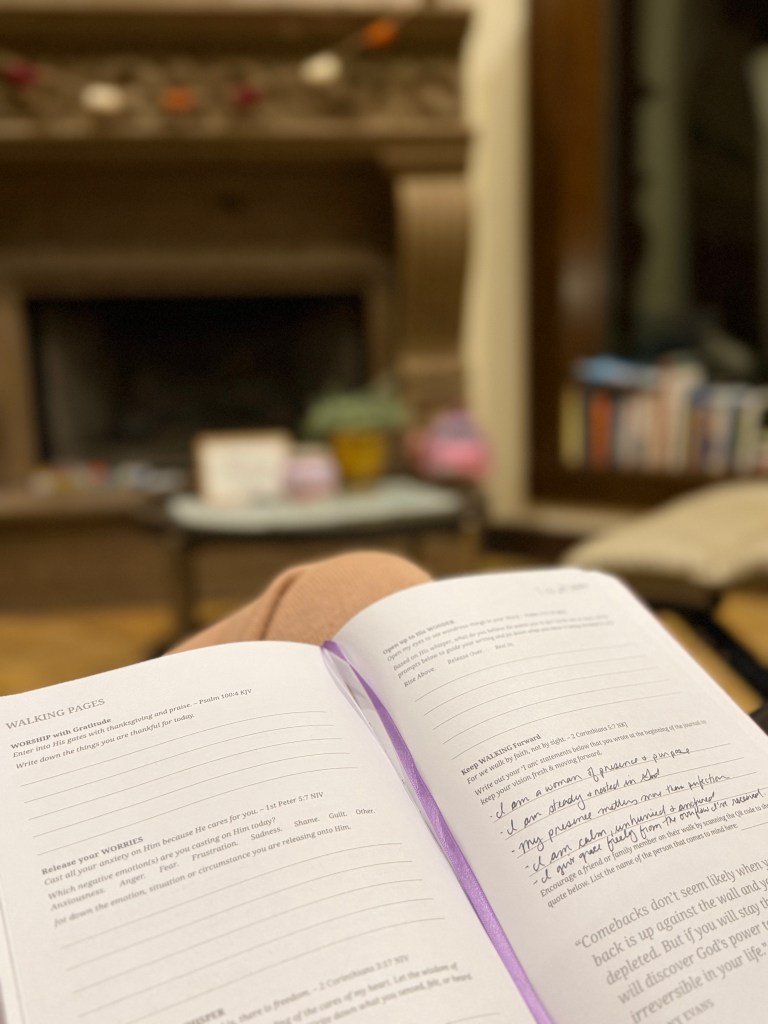
This week hasn’t gone the way I hoped.

We’ve had a stretch of travel, and then the inevitable work of unpacking and getting back into rhythm. I told myself this would be the week we’d finally settle in again — but instead, the calendar filled up before I could even think. Appointments. Repairs. A doctor visit. A birthday party right in the middle of the day because, well… homeschoolers.

And here I am on a Wednesday morning realizing:
I haven’t done one face-to-face math lesson with my kids this week.

Math is one of the priorities I set for this term — a subject I really want to see progress in — but the rhythm hasn’t matched the intention. The kids have been doing their independent work, yes, but our shared time at the table keeps slipping through the cracks.

And even though I know this isn’t failure, that old voice still sneaks in:
You’re behind. You’re not consistent enough. You’ll never get back to steady.

That’s when I came to Philippians 4:8, and it stopped me right in my spinning thoughts:

“Finally, brothers and sisters, whatever is true, whatever is noble, whatever is right,
whatever is pure, whatever is lovely, whatever is admirable—if anything is excellent or praiseworthy—think about such things.”

This isn’t a verse about pretending life is fine.
It’s about refocusing the heart when plans unravel — learning to see what’s still good, still solid, still redeemable.


A Rhythm That Bends

The truth is: we’ve been doing a lot, and life is simply full.
Learning hasn’t stopped; it’s just looked different. There’s value in independent work, in responsibility, in the quiet growth that happens when we’re not hovering over every page.

Homeschooling teaches me — again and again — that rhythm isn’t about rigid control. It’s about flow. Some weeks build momentum, and others remind us to bend.

And maybe the bending is the real education.


Not because the week gets easier, but because my heart does.


When the rhythm slips, that’s when I return to gratitude.
Not the surface kind, but the noticing kind — I’m thankful this child worked on their own today.
I’m thankful this interruption gave us a conversation we wouldn’t have had otherwise.
I’m thankful we’re learning flexibility, not just fractions.

A broken rhythm is not a broken day. It’s just an invitation to reorder what matters.


🌿 Read the Full Reflection

If this resonates, you can read (or listen to) the full reflection with audio, journaling prompts, and a family practiceover on Substack.

🌾 Read “When the Week Comes Undone” and the Something to Carry Reflection on Substack →

Through December, all paid reflections are open to everyone as part of my Founding Season launch — so you can explore the full experience for free.


🌸 Stay Connected

You can join me at Delight & Savor on Substack for:

  • quiet reflections on homeschool life and faith,
  • the Something to Carry series with journaling prompts and audio, and
  • seasonal Field Notes for beauty and rhythm in your home.
An Unexpected Summit Along the Way


How homeschooling made room for my son’s passions to grow

It didn’t start with a prayer.
It started with me — doing what I do best — taking on too much.

I narrowed things down, minimized, found my focus… and then slowly began adding again.
A blog.
Curriculum I’ve written and want to share.
A new homeschool planner.
Our high school literature class at co-op.
The social media for my husband’s medical practice.

All good things — meaningful, creative, purposeful — yet somehow together, too much for one small soul to hold.

So then I prayed.
Not for less, exactly, but for balance — for that quiet center where my work and my motherhood don’t have to compete for air.

And then something unexpected happened.

My son offered to take over the filming and editing of my reels and short videos — a small side job, yes, but really, a doorway. He’s always loved videography, and suddenly here was space for him to step into it, and for me to step back and watch.

It’s funny — I’ve been teaching him for years. But in this, he’s the teacher.
He moves with instinct. Knows how to frame the light, how to catch a moment and make it breathe. I watch him, amazed, and think, I couldn’t have done that.

This, too, is education.
Not only the shared work and real delight — but the honoring of passion.
The quiet knowing that what God planted in him isn’t mine to direct, only to nurture.

One of the gifts of homeschooling is the margin it gives for this kind of becoming.
When academics take their rightful, reasonable place — not the whole day, just the necessary part — there’s room left for a child’s true self to unfold.

Charlotte Mason once said, “Children are born persons.”
Not extensions of us.
Not clay to be molded.
But living souls with their own creative longings and sacred callings.

Today, I saw that truth in motion — behind a camera, in a song choice, in the curve of a smile as he clicked “save.”
Maybe this is what balance looks like after all — not perfect order, but shared creation.

Thank You, Lord, for this unexpected summit along the way. I’ll rest here for a moment and give thanks before the climb continues.


🌿 Something to Carry

Think of a time your child lost themselves in something they loved — building, sketching, filming, dreaming.
How did time move then?
Slow and golden, like it was meant to?

Children bloom in the margins — in the unhurried hours when imagination has room to stretch.
When every minute is filled, their wonder has nowhere to rest.
But when we make space — real, breathing space — they unfold quietly into who they already are.

Hold this truth:
Growth needs room. Wonder needs margin.

Embracing the Charlotte Mason Philosophy: Crafting a Harmonious Homeschool Environment

Most homeschool days feel like a tug-of-war between schedules and scattered lessons. The Charlotte Mason philosophy invites you to slow down and craft a balanced learning environment where beauty and meaning settle gently into your family’s rhythm. Here, education becomes a shared tapestry of wonder and connection—not just busywork. Let’s explore how this approach can bring calm and purpose to your homeschool planning. Learn more about the Charlotte Mason method here.

The Heart of Charlotte Mason Philosophy

The Charlotte Mason philosophy is rooted in the idea that education should be an enriching experience that nurtures the soul and mind. This approach emphasizes the importance of creating a learning environment that is both beautiful and meaningful.

Beauty in Education

Imagine stepping into a classroom where every lesson is a feast for the senses. Charlotte Mason believed that beauty plays a crucial role in education. Teaching isn’t just about facts; it’s about surrounding your children with inspiring materials and experiences. Consider displaying art and playing classical music during lessons. Such elements don’t just decorate a space; they create an atmosphere that fosters curiosity and appreciation for the world. By doing this, you invite your children to see learning as a beautiful journey.

Connection and Meaning in Learning

Beyond aesthetics, the Charlotte Mason method places a strong emphasis on connection—both to the material being learned and between family members. Lessons are designed to be engaging and relevant, allowing children to form meaningful connections to the subjects. This approach encourages you to link learning with daily life. For example, if you are studying plants, you might take a nature walk to observe them firsthand. This method not only deepens understanding but also strengthens family bonds as you explore together. Explore further ways to connect learning here.

Creating a Balanced Learning Environment

Transitioning from traditional methods to a Charlotte Mason-inspired homeschool can seem daunting, but it offers a rewarding balance that honors both structure and spontaneity.

Harmonizing Schedules and Lessons

Balancing schedules with lessons is key to a smooth homeschooling experience. Begin by identifying the natural rhythms of your day. Are mornings more productive for your family? Use that time for core academic subjects. Create time blocksrather than rigid schedules. This flexibility allows for deeper exploration when a subject captures your child’s interest. If math is completed quickly, you might spend more time on a science experiment. The goal is to let your schedule breathe, accommodating both structure and moments of discovery.

Cultivating a Peaceful Homeschool Atmosphere

A peaceful learning environment doesn’t just happen; it’s cultivated. Start by simplifying your space. Remove distractions and surround your children with tools that inspire. Maintain a routine that includes quiet times for reflection and creativity. By doing so, you foster a sense of calm and focus. Remember, the objective isn’t perfection but creating a setting where your family can thrive. Discover more about maintaining balance in education here.

Practical Homeschool Planning Tips

Planning is the backbone of a successful homeschool environment. With the right resources and strategies, you can create an enriching experience for your children.

Tailoring Educational Resources

Every child learns differently, so it’s important to tailor educational resources to fit their needs. Begin by selecting materials that resonate with your child’s interests. If your child loves stories, incorporate more literature-based learning. Use a variety of resources—books, online tools, and hands-on activities—to keep learning dynamic and engaging. By doing so, you ensure that education remains personal and effective.

Integrating Literature and Language Learning

Literature is a cornerstone of the Charlotte Mason philosophy. It’s not just about reading but about immersing your child in rich language and narratives. Choose books that are age-appropriate yet challenging. As you read, discuss themes and characters to develop critical thinking. Additionally, integrate language learning by exploring the cultural context of the stories. This approach not only enhances vocabulary but also broadens your child’s worldview. Find more insights on integrating literature in homeschool planning here.

In embracing the Charlotte Mason philosophy, you are not just teaching; you are crafting an experience filled with beauty, connection, and meaning. This approach to homeschooling invites you to explore education as a shared journey, where learning is woven into the fabric of daily life.

Embracing Spanish: A Journey of Language and Culture in Your Homeschool

Most homeschool Spanish curriculum options feel like another task on your already full plate. You want Spanish language learning to flow gently alongside your days, not compete with them. This post offers thoughtful ways to weave language and cultural appreciation into your homeschool rhythm, honoring the Charlotte Mason language approach your family treasures. For more insights, you can visit this helpful resource.

Weaving Spanish into Daily Rhythm

Embracing Spanish in your homeschool doesn’t mean adding more to-do lists. It’s about gently integrating it into the natural rhythm of your day. Small changes can make Spanish a living part of your family’s world.

Simple Language Exposure

Imagine starting your day with a simple Spanish phrase. Greeting each other with “Buenos días” sets a cheerful tone. You can label household items with their Spanish names. This constant exposure helps your children think in Spanish. The more they see and hear, the more natural it becomes.

Continue reading “Embracing Spanish: A Journey of Language and Culture in Your Homeschool”